- Anasayfa
- Kategoriler
- Yazarlar
- Hizmetlerimiz
- Akademik Faaliyetler
- Hakkımızda
- İletişim
- Giriş Yap
- Sepet: (0 TL)
| Yazar: | Gülizar Doğan |
| Eser Türü: | Basılı, Dijital |
| Yayıncı: | DTA Yayıncılık |
| Yayın Tarihi: | 20/02/2026 |
| Kategori: | Din Bilimleri |
| Sayfa Sayısı: | 105 |
| Dil: | Türkçe |
| Kapak: | Karton |
| Boyut: | 13.5 x 21 cm |
| ISBN: | 978-625-5959-89-8 |
| E-ISBN: | 978-625-5959-88-1 |
| DOI: |
 10.70717/dta.9786255959881
|
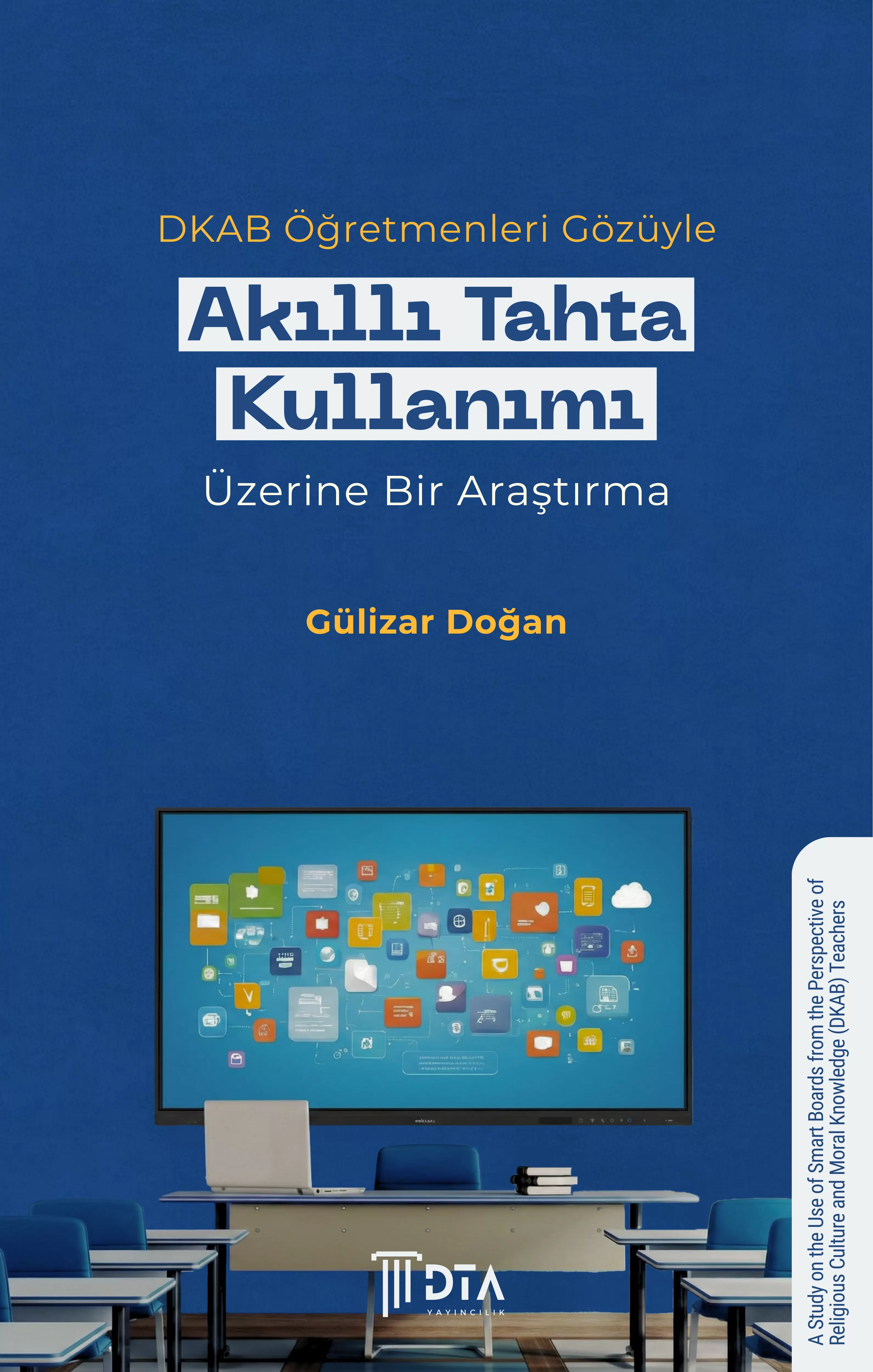
Teknolojik gelişmeler, yalnızca günlük yaşamı değil; eğitim anlayışını, öğretim yöntemlerini ve sınıf içi uygulamaları da dönüştürmektedir. Bu dönüşümün en görünür araçlarından biri olan akıllı tahta, derslerin somutlaştırılması ve öğrenme sürecinin verimliliği açısından önemli bir imkân sunmaktadır. Öğretmenlerin sınıftaki yardımcı araçlarından olan akıllı tahtalar, anlatılan konuyu “duyulan” olmaktan çıkarıp “görülen” ve “hatırlanan” hâle getirebilmektedir. Böylece dersi daha canlı, daha somut ve daha etkili kılmak mümkün hale gelmektedir. Bu kitap, Din Kültürü ve Ahlak Bilgisi dersinde akıllı tahta kullanımının öğrenilen bilgilerin kalıcılığı ve dersin verimliliği üzerindeki etkilerini ortaya koymayı amaçlayan bir çalışmanın kitaplaştırılmış hâlidir. MEB bünyesinde görev yapan öğretmenlerle yapılan görüşmeler ve literatür verileri doğrultusunda yapılandırılan eser; kavramsal çerçeve, yöntem, bulgular-yorumlar ve öneriler bölümleriyle konuyu bütüncül biçimde ele almaktadır. Ayrıca ulaşılan sonuçların, alanda yapılacak yeni çalışmalara katkı sunması hedeflenmiştir.
Technological developments are transforming not only everyday life but also educational approaches, teaching methods, and classroom practices. One of the most visible tools of this transformation is the smart board, which offers a significant opportunity to make lessons more concrete and to improve the efficiency of the learning process. As a supportive classroom tool for teachers, smart boards can help turn a topic from something merely “heard” into something “seen” and “remembered.” In this way, it becomes possible to make the lesson more lively, more tangible, and more effective. This book is the published version of a study that aims to reveal the effects of smart board use in the Religious Culture and Moral Knowledge (DKAB) course on the retention of learned information and the overall effectiveness of the lesson. Drawing on interviews with teachers working under the Ministry of National Education (MoNE) and data obtained from the literature, the work addresses the subject in a holistic manner through sections on the conceptual framework, methodology, findings and interpretations, and recommendations. It is also intended that the results achieved will contribute to further studies in the field.
Din Eğitimi, Eğitim ve Teknoloji, Akıllı Tahta
Religious Education, Education and Technology, Interactive Whiteboard
DTA Yayıncılık, kitap yayıncılığının yanı sıra, akademik kitap ve tez projelerine yönelik danışmanlık ve editoryal hizmetler, dizgi ve tasarım çalışmaları (afiş ve web tasarımı dahil) ile akademik bilgi paylaşımı destekleyen kurslar ve atölyeler düzenlemektedir.
© Copyright DTA. Tüm Hakları Saklıdır

Bugünkü Ziyaret: 42 | Toplam Ziyaret: 137006